Styles
Japandi
Japanese restraint crossed with Scandinavian warmth: wood, matte, deliberate emptiness.
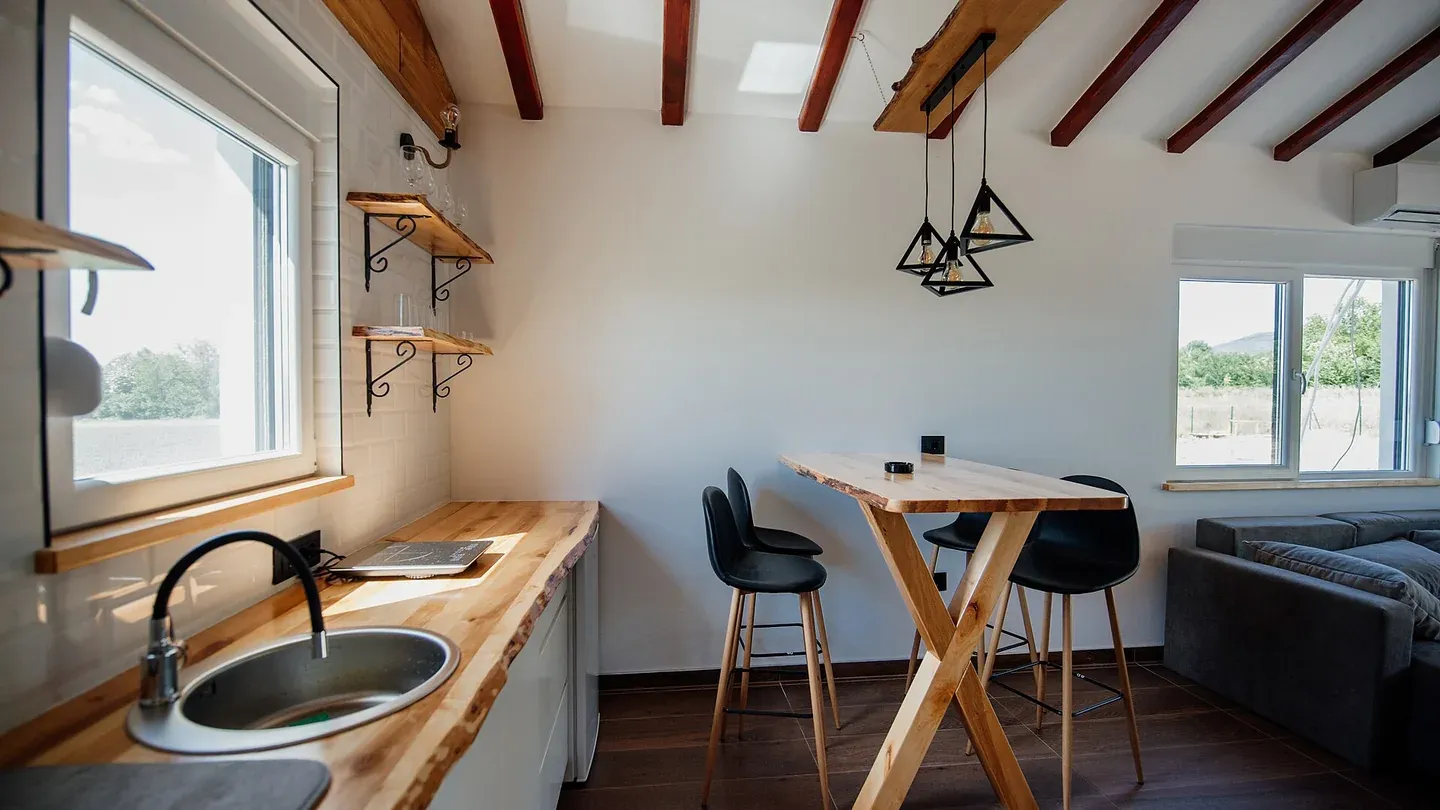
Japandi joins two traditions that share a distrust of excess. From Japan come restraint, lower proportions, and the acceptance of emptiness as part of the composition. From Scandinavia come the warmth of pale wood and everyday comfort. The result is calmer and darker than a purely Scandinavian kitchen.
It is a style that rests on the quality of very few elements. There is little to look at, so everything visible has to hold up: the grain of the wood, the texture of the counter, the way a door comes to rest. It does not forgive material compromises.
Style markers
- A palette reduced to three tones, all desaturated
- Fine-grained wood, often mid-tone rather than pale
- Matte countertop, never mirror-polished
- Very few objects left out on surfaces
- Minimal or integrated hardware
Typical materials
- Fumed oak
- Textured matte countertop
- Lime plaster
- Handmade ceramic
The honest limitation
The style assumes surfaces stay clear. If your kitchen has to host a toaster, a coffee machine, and a mixer permanently, plan a closed appliance garage for them, or the effect collapses.
What comes next
The materials
A style is built from specific materials, and each behaves differently after five years of use.
Take the next step
Talk to a designer
You know the style you want. A designer turns it into a plan, dimensions, and a materials list.
Reply within 24 to 48 hours. No obligation.